Wooden, Metal or Synthetic: What Changes in a Croquet Mallet?
Croquet mallet materials change feel, upkeep and control; learn what wooden, metal and synthetic heads suit your lawn, playing style and casual games.
The most common mistake when choosing a croquet mallet is treating the head material as a simple ranking, from traditional to modern. That can cost you a comfortable swing: a head that feels reassuring in the shop may feel awkward after a few turns on your own lawn. Croquet mallet materials matter, but their effects make most sense alongside head shape, balance, grip and the kind of play you enjoy.
Wood, metal and synthetic materials each bring a different character to a mallet. None makes a player accurate on its own, and none is automatically right for every garden game. The useful question is what you want the mallet to feel like in your hands and how much care you are willing to give it.
What material changes
A mallet head meets the ball, but it also affects the way the whole tool swings. Its weight, dimensions and distribution influence how easily you can guide it, how solid contact feels, and whether the head suits your stance. Material contributes to those qualities, yet the finished mallet depends on the design as well.
Think of a mallet like a kitchen knife: the material matters, but shape and balance decide whether it feels natural for the task. A heavier head may feel steady to one player and tiring to another. A lighter head may seem easy to place but less satisfying to someone who prefers a firm, deliberate stroke.
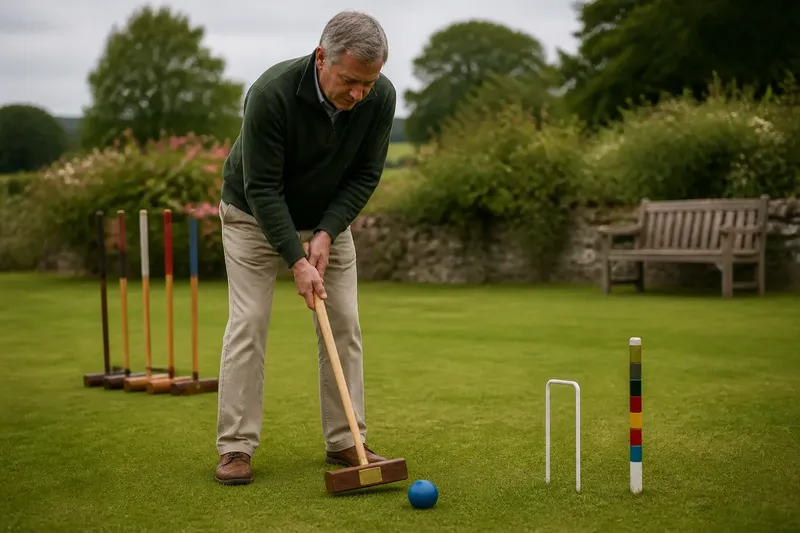
When comparing options, hold each mallet as you would while playing. Notice whether the head hangs comfortably, whether your hands settle on the grip without strain, and whether the length lets you stand in a relaxed position. If you can, make a few gentle practice swings in a clear space, keeping well away from other people and objects.
Wooden heads
Wood offers a familiar, subdued feel and suits players who enjoy a classic-looking mallet. Different woods and constructions vary, so “wooden” does not tell you exactly how heavy, firm or lively a particular head will feel. The finish and build matter, too.
Wood can be a pleasing choice for relaxed play where appearance and a straightforward feel count as much as specialized features. It can also show wear: scuffs, small dents or changes in the finish may appear with regular use. Store a wooden mallet somewhere dry and avoid leaving it out in damp grass or exposed weather.
Check that the head is sound and securely joined to the shaft, and look for rough edges or damage that could affect handling. A little surface wear may be cosmetic, while a loose head is a reason to stop using it until it is properly repaired or replaced. For maintenance, follow the maker’s care directions rather than applying a finish or treatment by guesswork.
Metal heads
Metal heads often feel compact and solid. Some players like the direct sensation at contact, while others find a metal head less forgiving to handle or simply prefer the quieter, warmer feel of wood. The shape and weight distribution can make two metal mallets feel quite different from each other.
Metal may suit a player who values a durable-feeling head and expects a mallet to see regular use. Still, the material is not immune to neglect. Inspect it for damage, loose joints, rough areas or corrosion, and keep it clean and dry according to the manufacturer’s instructions. If a coating is chipped or the head has become unstable, do not assume that a home repair is suitable.
Because metal can feel firm at impact, it is especially helpful to try a mallet before choosing it. A comfortable grip and manageable swing matter more than the impression that a head looks sturdy. If the sensation makes you tense your wrists or grip harder, another design may be a better fit for casual play.
Synthetic heads
Synthetic heads include a range of materials and constructions, rather than one consistent type. They may be selected for practical care, a particular feel or a lower-maintenance finish. Ask what the head is made from and how it is intended to be stored; the label “synthetic” alone cannot answer those questions.
For a family or village set used by different players, a synthetic option can be appealing if its surface is easy to wipe clean and its design feels comfortable to several people. But a head that is convenient to maintain may still be too heavy, light or awkwardly balanced for an individual player. Treat feel and handling as separate decisions from ease of care.
Check the head for cracks, separation or rough damage, and avoid assuming that all synthetic materials respond alike to heat, sun or cleaning products. Follow the maker’s directions for cleaning and storage. A soft cloth and sensible indoor storage are often safer starting points than an unapproved solvent or abrasive pad.
Fit beyond material
Material is only one part of a mallet’s fit. Head size and shape affect where the ball meets the face. Shaft length changes posture and reach, while grip thickness and texture affect how securely and comfortably you hold the tool. The balance between head and shaft can make a mallet feel nimble or ponderous even when two heads share a material.
Imagine a casual player who borrows a wooden mallet at a neighbor’s lawn and likes its appearance, but finds the head difficult to guide. They try a lighter synthetic model with a grip that sits more comfortably in their hands. The observable result to look for is not a promised improvement in score; it is whether they can take a relaxed stance and repeat a controlled swing without fighting the tool.
For shared play, consider who will use the set and how it will be stored between games. A mallet that is manageable for adults may be awkward for a smaller player, and a material chosen for easy cleaning does not compensate for a poor grip. If one mallet must serve several people, let each user handle it before settling on a choice.
Choosing for your play
Use your playing habits to narrow the options. A player who values traditional appearance and a familiar feel may lean toward wood. Someone who prefers a compact, firm sensation may want to try metal. A group prioritizing straightforward upkeep may consider synthetic construction, after checking the specific material and care instructions.
- Feel: Does the head feel comfortable during a gentle practice swing?
- Balance: Can you guide the mallet without gripping tightly or lifting your shoulders?
- Fit: Does the shaft length let you stand naturally over the ball?
- Condition: Are the head, shaft and joints sound, with no loose or damaged parts?
- Care: Can you store and clean the material as its maker recommends?
- Shared use: Can the other likely players handle it comfortably?
If you are choosing a first mallet, borrowing several types at a local club or asking to handle a shop’s display models can be more useful than judging from photographs. Keep the comparison simple: try the same relaxed swing, notice the grip and balance, and choose the one that feels easiest to control. A premium-looking material is no substitute for a comfortable tool.
Questions players ask?
Is a wooden croquet mallet better for beginners?
Not automatically. A beginner benefits most from a mallet that feels comfortable, has a manageable balance and suits their stance, whether its head is wood, metal or synthetic.
Does a metal head make a player more accurate?
The material alone does not determine accuracy. Head shape, balance, grip and a relaxed, repeatable swing all affect how well a player can guide the mallet.
Are synthetic mallets easier to care for?
Some synthetic constructions may be convenient to wipe clean, but care varies by material and finish. Check the maker’s directions before choosing a cleaning product or storage method.
Can one mallet work for a whole family?
It can, if the likely players can hold and swing it comfortably. Let each person try the grip and stance; a material that suits one player may not feel natural to another.
Let comfort decide
Wooden, metal and synthetic croquet mallets differ in feel and care, but the material label is only a starting point. The best choice for your casual games is the one whose construction suits your preferences, whose condition is sound and whose balance lets you swing comfortably. Before a purchase, hold the mallet as you would on the lawn and check that it feels like an invitation to play, not another thing to manage.
Once you have chosen, make a habit of putting the mallet away clean and dry, and give its head and joints a quick look before play. That small bit of attention helps you notice changes in condition early and keeps the focus where it belongs: on enjoying the next turn.