Why Village Games Develop Different Local Rules
Village games develop different local rules as grounds and players vary. Learn how to compare versions, explain the rules in use, and settle disputes fairly.
The most common mistake in a village game is assuming the version played in one place must be the version played everywhere. That can leave visitors unsure of a boundary, a turn, or a disputed shot—and turn a friendly match into a debate. Local rules make more sense when the group names what differs and explains how to play before anyone takes a turn.
Local rules, not errors
A game’s name does not always tell you its exact rules. A village may use a different boundary, order of play, or way to settle a close call from a nearby community. These variations are not automatically mistakes; they are local arrangements that players need to understand before the match.
Start by separating the game’s shared structure from the choices made locally. The shared structure might be taking turns toward a target, while local choices determine where play begins or what happens when an object leaves the playing area. If a club follows rules set by a governing body, check those rules before describing a variation as local.
Keep the explanation short and practical. State the boundary, the order of play, and the method for resolving a close call. A written note can help returning players, but a spoken explanation before play gives newcomers a chance to ask questions.
Grounds shape play
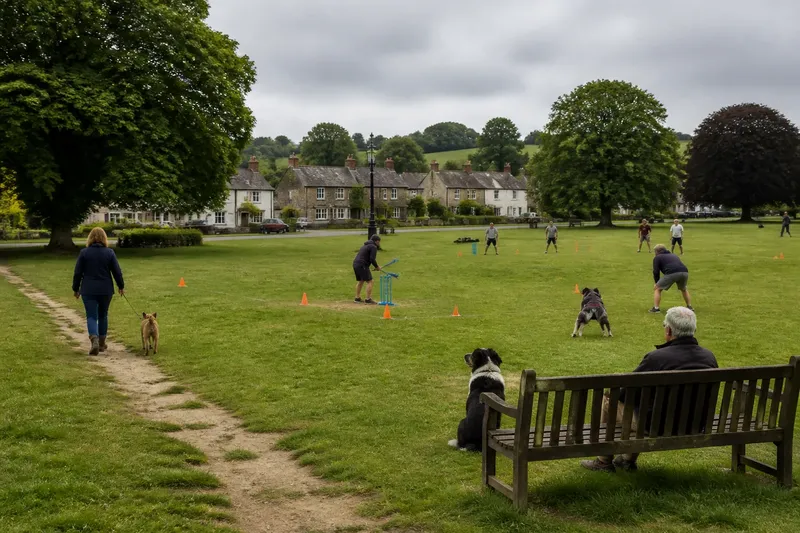
Local rules often reflect the ground. A hedge, gate, ditch, or shared path can affect where a game can be played safely and clearly. A boundary that works on one field may not make sense on another, so players should agree on visible landmarks rather than relying on a vague phrase like “the usual line.”
Walk the area before play and identify the markers players can see from their positions. Say what happens if a ball or other playing object reaches a shared path or an awkward patch of ground. If conditions change during a match, pause and agree on a temporary arrangement before continuing.
Explain the local version
Regular players may know local conventions without realizing they are not obvious to visitors. Tell new players when turns begin and end, how to handle a close call, and whom to ask if something is unclear. Demonstrating a convention in place is often easier than delivering a long list of exceptions.
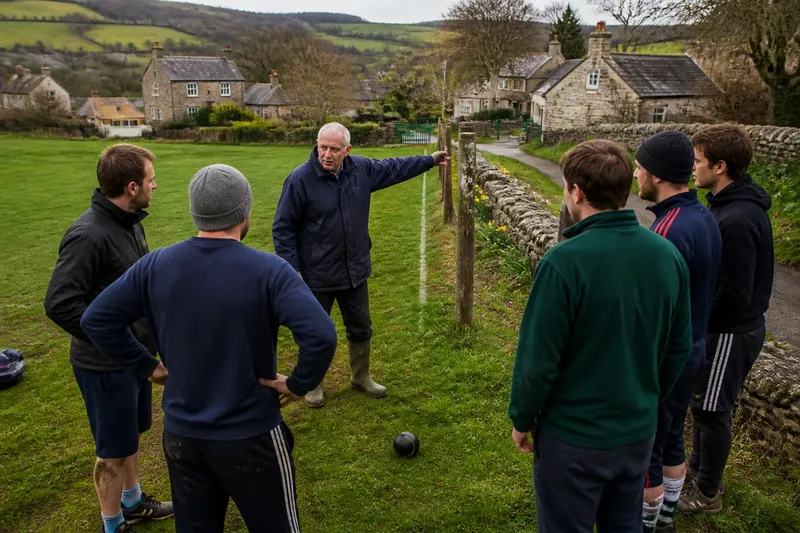
Imagine a visiting player arrives at a village match where a fence post marks the edge of play, but the player expects the nearby path to be the boundary. Before the game, a regular points out the post and explains what happens when a shot passes it. The visitor can then judge the boundary during play, and the group avoids stopping to resolve a mismatch in assumptions.
Settle variations fairly
When players disagree, describe the exact situation before debating which version is correct. Is the boundary hard to see? Do players interpret the order of turns differently? Naming the problem helps the group decide whether to clarify an existing rule or agree on a local variation.
For a proposed change, explain what will differ and when the group will review it. Apply the arrangement consistently to everyone, and avoid changing it halfway through a close match unless play must stop for an immediate reason. At the review, discuss whether the wording was clear and whether players could apply it evenly.
- Check whether the boundary is visible from where players stand; if it is, keep it and name the marker, but if it is not, choose a clearer landmark.
- Check whether every player knows who takes the next turn; if they do, begin play, but if they do not, explain the order before continuing.
- Check whether a shared path crosses the playing area; if it does, mark it out of play and explain the response, but if it does not, use the agreed field boundary.
- Check whether a close-call rule is understood by all players; if it is, apply it, but if it is not, pause and agree on plain wording.
- Check whether a proposed variation applies equally to everyone; if it does, announce it before play, but if it does not, revise it or leave the current rule in place.
- Check whether players know when a trial arrangement will be reviewed; if they do, record that point, but if they do not, set the review moment before trying the change.
Questions about local rules?
Are local rules part of the game?
They can be, as long as players know what applies in that place. If a governing body sets rules for the competition, check those rules before using a local variation.
How should visitors learn the rules?
Give a brief explanation before play and point out important markers on the ground. Invite questions, especially about boundaries, turns, and close calls.
What if two versions conflict?
Pause and identify the specific disagreement rather than arguing about which version is universally correct. Agree on an arrangement for that match, then discuss any lasting change separately.
Keep rules easy to find
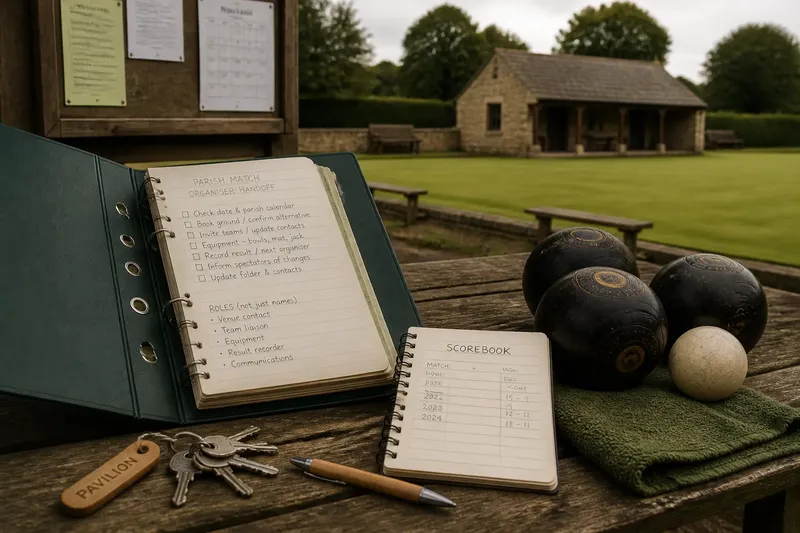
A short note in a club folder or on a match-day notice can record the boundary, turn order, and any local variation. Include when the note was last reviewed so returning players can check whether it still applies. Think of it like a label on a shared cupboard: it saves people from guessing what belongs where.
For anyone searching for village games with different local rules, the useful question is not which version is most authentic, but which rules apply at the next match. State them plainly, show where they matter on the ground, and make room for players to ask before a dispute interrupts play.