Why Village Greens Leave Room for Many Kinds of Game
Why village greens leave room for many kinds of game: learn how temporary boundaries can protect play while keeping a shared patch welcoming and usable.
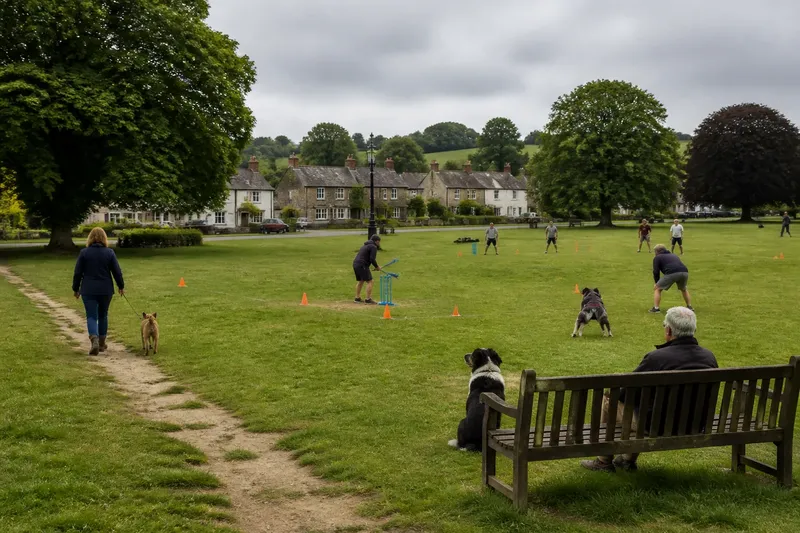
The most common mistake on a village green is treating a game’s boundaries as a claim on the ground. That can turn a few cones into an unwelcome barrier and leave a local game looking more permanent than it is. Village greens leave room for many kinds of game when markers show where play happens without making the rest of the green feel off-limits.
Boundaries with purpose
Start by deciding what people need to understand: where active play begins, where a ball might travel, or which patch should stay clear. Then choose only the markers that make that distinction visible. A ring of cones may suit a casual game; soft rope can describe a broad edge, while small flags can mark a target area without outlining an entire field.
Match the marker to the surface and the activity. Flat cones are easy to spot and less likely to catch a foot, while rope can be hard to see in long grass. Avoid stakes or cords that could trip someone or interfere with maintenance. If the green’s manager has rules about equipment or placement, follow those before setting anything out.
Keep the marked area proportionate. A compact game can often use a smaller footprint, but a running activity may need room for players to slow down safely. Mark the edge where it can be seen before someone enters the action, not where it blocks a natural approach or creates an obstacle.
Movement beyond play
A green is not just a playing surface. People cross it on the way to a shop, walk a dog, or pause near a bench. Notice the worn track from the gate and the route people take to reach seating. Those paths are evidence of how the ground already works, not empty strips waiting to be assigned.
Imagine a group arriving with cones for a ball game, while a familiar footpath cuts between the gate and a bench. They place the cones across the track, then see walkers turning into the playing area to get around them. If they move the boundary to one side and keep the track open, walkers can continue their route and players gain a clearer edge to watch. The visible result is a game that occupies less of the green while creating less confusion.
Where a route passes near active play, make the distinction easy to read. A marker set back from the path can clarify the playing edge; a friendly sign at the entrance can point out the open way through. The right arrangement depends on the site, so check local guidance with the person responsible for the ground.
Reading temporary markers
Markers work when their meaning is obvious to people who did not put them there. A line of cones may indicate an active game, but a single cone near an entrance could look like abandoned equipment. If the purpose is not clear from the layout, add a short note on a portable board or ask a volunteer to explain the arrangement near a busy entrance.
Before play starts, agree on a simple pause signal, such as a raised hand or a spoken call. Choose one that the group can see or hear in the conditions on the green. The signal is for brief coordination, not a way to give one game control over everyone else’s movement.
After play, remove the markers and check that nothing has been left in the grass. A temporary boundary should be temporary in practice, not merely in intention.
Surface and activity
Grass can be firm one day and soft after rain. Look at the playing patch and the routes around it before placing equipment. If the turf is muddy or visibly worn, move the activity to a sounder area or choose another time rather than funneling more foot traffic across the damaged spot.
Different games need different shapes. A quiet target game may fit in a small corner, while a running game needs room for movement and stopping. Consider where players will wait, where equipment will sit, and whether spectators are likely to gather. Those details can matter as much as the central playing area.
Say a small group brings a target game to a green after rain. They notice that the usual patch is soft, while a nearby section is firm and does not cross a worn path. If the green’s manager permits play there, they can shift the markers to the sounder patch; if not, they can postpone or choose another activity that does not add wear. The decision follows the condition of the ground and the site’s rules, not habit.
Choosing simple equipment
Portable objects can make a boundary legible without changing the landscape. Cones, visible flags, a lightweight rope, or a small notice board may be enough. Think of markers like commas in a sentence: they clarify how to move through a space without rewriting the whole ground.
Before setting out equipment, consider whether it is visible, safe for the surface, and easy to remove. Store it together afterward, and do not leave loose objects where a passerby could trip or a mower could catch them. If nobody knows where the kit belongs, agree on a storage place with the site’s manager before using it.
What should organizers consider?
How large should the playing area be?
Allow enough space for the game’s actual movement and stopping, rather than taking the largest patch available. If the boundary would block a path or another use, reduce or relocate the marked area.
Can two activities use the green?
They can share it if their spaces do not overlap and people can move between them without crossing active play. If those conditions are not clear, take turns or move one activity to another part of the ground.
What if the grass is worn?
Check the playing patch and the routes people will use around it. If either is muddy or visibly damaged, shift to a sounder permitted area or pause until the ground can take use without adding to the wear.
Who should approve the layout?
Check with the person who manages the green, particularly if equipment, access, or site rules are involved. If permission is unclear, ask before placing markers rather than expecting other users to work around them.
Restore the open ground
When the game ends, collect the markers, clear any litter, and check for obvious damage or objects left behind. If a route has become muddy, avoid directing people across it again; if equipment is missing, look for it before leaving. A tidy reset helps the next user recognize the green as shared ground rather than a space still occupied by the previous game.
Village greens leave room for many kinds of game when temporary boundaries make play understandable without taking over the setting. The useful test is simple: can a passerby tell where the game is, and can everyone else still use the green comfortably? If the answer changes as people arrive or the ground softens, move the markers—or put them away.