How to Keep a Parish Match on the Annual Calendar
Keep a parish match on the annual calendar with clear handoffs, a workable date, and a simple record that helps the next organizer make sound choices.
The common mistake in keeping a parish match on the annual calendar is letting all the arrangements live in one organizer’s head. When that person steps away, nobody may know whom to contact, how to book the ground, or what must be decided first. A match needs a handoff plan as much as it needs a date.
Think of the event plan like a house key: it is useful only if the next person can find it and knows which door it opens. Keep the focus on the practical chain that gets the match from one year to the next, rather than on making every gathering look identical.
Map the match
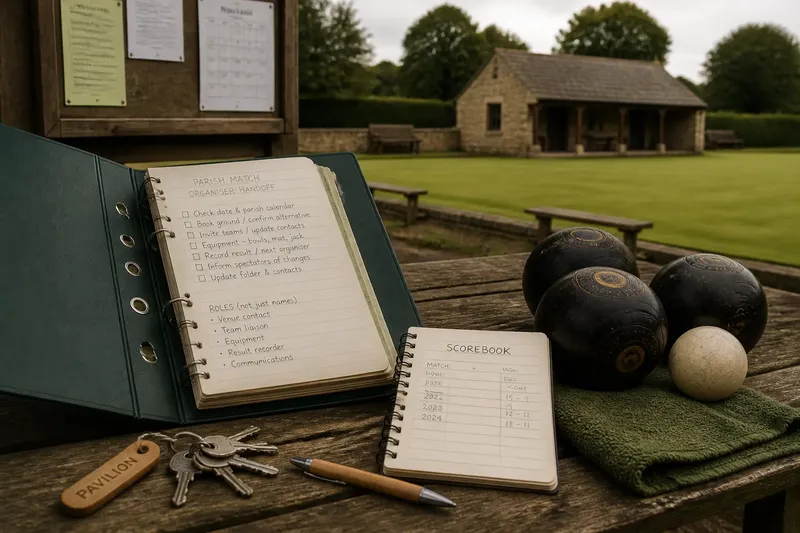
Start by listing the decisions that recur: who invites the teams, who checks the venue, who confirms the date, who handles equipment, and who tells spectators about changes. Put each task beside a role, not just a person’s name. That way, a new volunteer can take over without guessing which jobs were silently bundled together.
- Check whether the proposed date clashes with a parish event; if it does, choose another date and tell both teams before confirming the ground.
- Check whether the usual ground is available and suitable; if it is, request the booking, and if it is not, ask about a named alternative and update the invitation.
- Check whether the team contacts are current; if they are, send the invitation, and if they are not, ask the club or parish secretary to identify the right contact before announcing the match.
- Check whether the required bats, balls, posts, or other agreed equipment are accounted for; if they are, assign someone to bring them, and if they are not, borrow or replace what is missing before match day.
- Check whether a named person can record the result and next organizer’s details; if so, give them the scorebook, and if not, choose another volunteer and leave the record in the club folder.
- Check whether the announcement includes the venue, start time, participation details, and a contact for changes; if it does, share it, and if not, revise it before posting it at the village hall or sending it to the teams.
These checks make a small fixture easier to run without turning it into a formal production. A handwritten page in a club folder can be enough if it identifies the next action and who owns it.
Choose a workable date
Pick a time that fits the local calendar and the people who actually take part. A parish match might sit after a fair, alongside a club’s usual gathering, or in a season when the ground is commonly available. Check the parish noticeboard, school commitments, harvest activity, and other local events before inviting teams.
If the exact day cannot be fixed far in advance, agree on a dependable window and a date for making the final decision. Tell participants who will confirm it and how they will hear. That makes a weather or venue change less confusing, even when the familiar ground cannot be used.
Pass on useful records
A short record can save the next organizer from reconstructing the event from scattered memories. Note the match name, teams, venue, result, useful contacts, equipment arrangements, and any decision that should be revisited. Store it somewhere a successor can access, such as a shared club folder or a clearly marked file at the parish hall.
Record only what is useful, and ask permission before displaying people’s names or photographs, especially when children are involved. A scorebook can preserve details for participants, while a brief organizer’s note can explain practical matters such as where the pavilion key is kept or which noticeboard reaches local families.
What happens when plans change?
What if the organizer leaves?
Use the written task list to identify the next person for each job, then transfer the folder, contacts, and outstanding decisions. If no successor is ready, ask the club committee or parish group to appoint one before the next invitation goes out.
What if the ground is unavailable?
Check a suitable alternative with the venue’s responsible contact, then tell players and spectators the new location directly. If no appropriate ground is available, postpone and give people a clear way to learn the revised date.
What should be recorded after the match?
Write down the result, who organized the event, what equipment or venue arrangements worked, and any unresolved task for next time. If a detail will not help a future organizer or participant, leave it out.
Work through a handoff
Say a village bowls club has a match penciled in for the weekend after its summer fair, and the organizer is moving away. The club folder contains last year’s team contacts and a scorebook, but it does not name who booked the green or brought the bowls. The committee checks the parish calendar and confirms that the proposed weekend is clear; it asks the grounds contact about availability; then it gives separate volunteers the booking, team invitations, equipment, and result-recording tasks. One contact has changed, so the secretary supplies the current details before invitations are sent. The organizer adds those decisions and the next year’s open tasks to the folder. The observable result is a confirmed event with named owners for each arrangement, while the club can see which details still need attention next year.
If the green turns out to be unavailable, the same handoff shows who should ask about an alternative and who must notify the teams. The event does not depend on someone remembering an unspoken arrangement at the last moment.
Keep the workload shared
Make jobs small enough that people can accept them alongside ordinary life. One volunteer can confirm the venue; another can contact teams; someone else can bring the agreed equipment and update the record. If a task repeatedly falls through, change who owns it or simplify the arrangement rather than quietly relying on the same person to rescue it.
After the match, ask participants what caused confusion and what made the day run smoothly. Turn the answers into a specific note or change: update a missing contact, clarify the venue message, or assign the equipment box to a named role. For a parish match, that kind of practical continuity matters more than an elaborate ceremony. A clear handoff, a usable date, and a record someone can find give the next organizer a real place to begin.